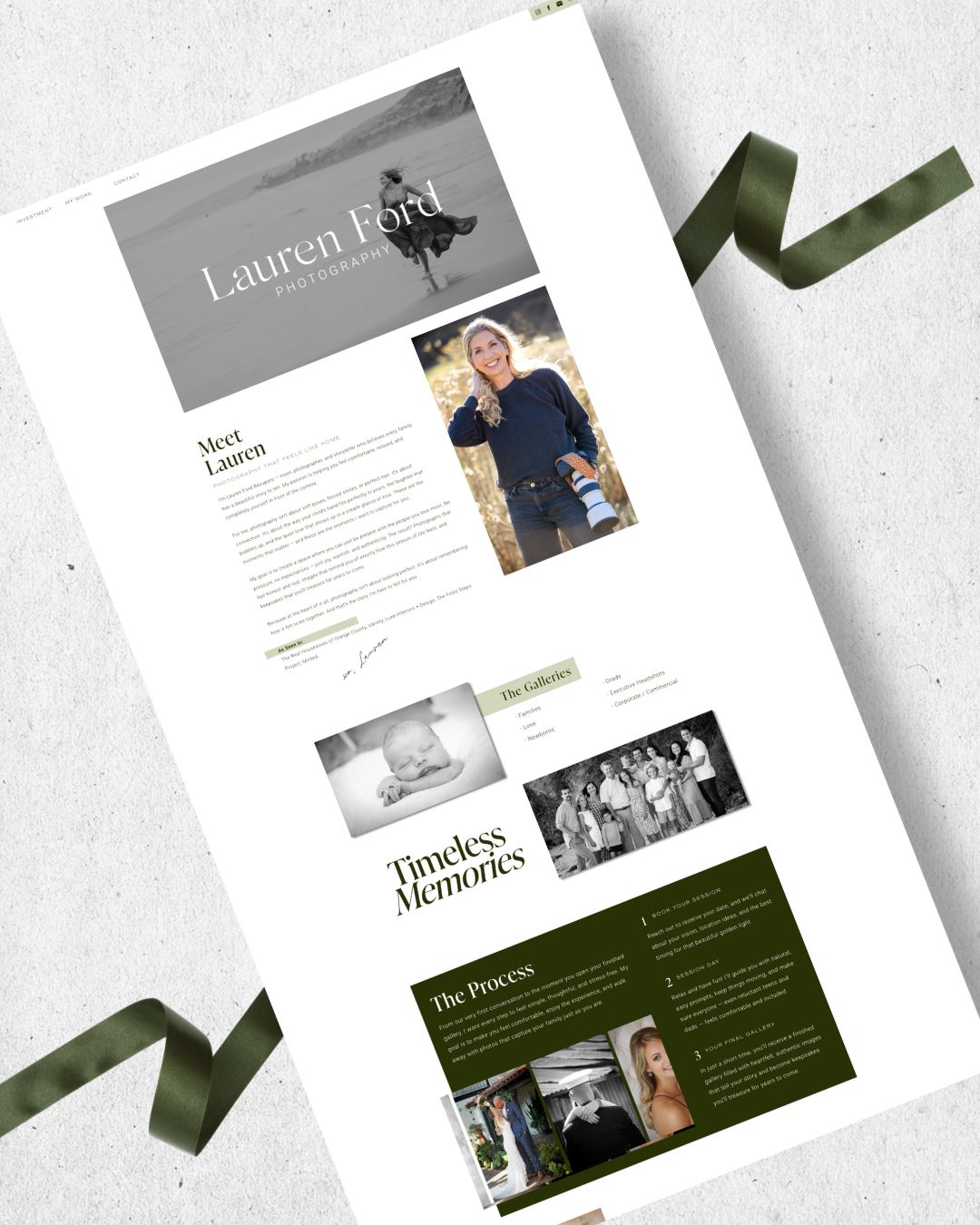
The Website Pages Every Photographer Should Have (If You Actually Want Clients to Book)
Most photographers build their website the same way. They add a home page, portfolio, about page, and contact form, upload some beautiful images, and hope people will magically book. But a photography website shouldn’t just be a gallery. On this page I will tell you exactly what pages should a photographer website have and the ones I suggest adding as a bonus.
If your goal is to book more photography clients, your website needs to function like a sales tool and a discovery tool. That means having the right pages that both:
- help potential clients find you through Google
- guide visitors through a clear path to booking
If you’re wondering what pages photographers should have on their website, this guide walks through the essential pages as well as additional pages that can improve your photography website SEO, client experience, and bookings.
The Essential Pages Every Photography Website Needs
These are the core website pages every photographer should have. Without them, your website is missing the structure needed to guide potential clients.
1. Home Page: Your Website’s Sales Pitch
First of all, let’s make something clear. Your home page is not a gallery, it’s a sales page. Many photographers make the mistake of filling their home page with dozens of images but never telling visitors what to do next.
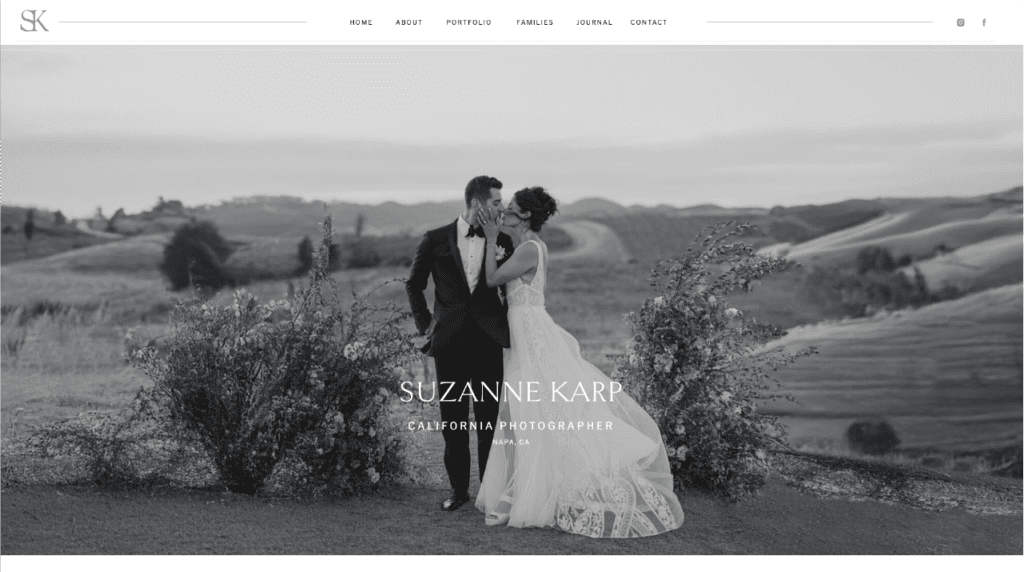
The hero (top section of your homepage) is your elevator pitch section and should quickly answer three questions:
- What type of photographer are you?
- Who do you serve?
- Where are you located?
For example: Newborn and Family Photographer serving Northern California
This helps both website visitors and Google understand your photography niche, which improves your SEO.
Your home page should then guide visitors toward the pages that help them decide to book you. Think of it like a navigation funnel or a map. The get to your home page, like your description on the hero and continue scrolling but what do you really want them to do next?
Roughly 90% of the links on your home page should direct visitors to two main places if the answer to the question was “to book a session”:
- your portfolio pages
- your investment or packages page
These are the pages where potential clients actually decide whether they want to work with you or not.
Your home page should include:
- A clear headline describing your photography services
- A short introduction to your work and style
- A few standout images
- Links to your main services or portfolios
- Clear call to action buttons (View Portfolio, See Packages, Book a Session)
Remember, the goal of the home page is simple: move visitors toward booking.
2. Portfolio Pages: Show Your Best Work
Your portfolio is one of the most important parts of your photography website. However, many photographers organize their portfolio as one giant gallery, which makes it harder for potential clients to find what they’re looking for.
Instead, consider creating separate portfolio pages by photography service. For example, you might create a Newborn Photography Portfolio, a Family Photography Portfolio, and a Maternity Photography Portfolio. Because when someone is searching for a newborn photographer, they want to immediately see newborn images, not weddings or senior sessions.
This structure also improves your photography website SEO because Google can better understand the specific services you offer. Remember to rename your images before uploading them to your website and include alt text.
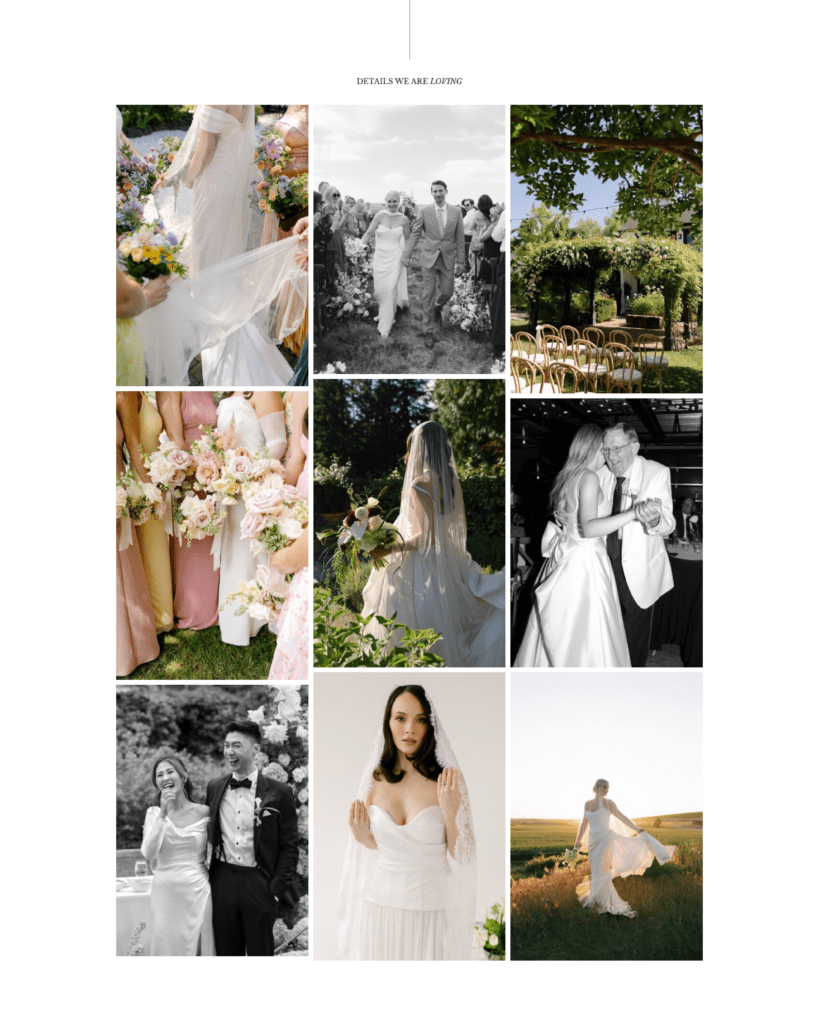
Each portfolio page should showcase:
- your strongest images
- a consistent editing style
- the type of sessions you want to book more of
Yes, it is optional but suggested to have the type of sessions you want to book more of. Include one of the packages you offer for that specific session on the portfolio page. Featuring your mid-tier or premier package can help potential clients quickly understand the experience and investment, while also guiding them toward the option you most want to book.
3. About Page: Build Connection and Trust
This is one of the most important pages on the list of “Website Pages Every Photographer Should Have”. Your About page is one of the most visited pages on photography websites because people want to know who they will be working with.
After viewing your work, people often want to know the person behind the camera. Their likes, values and how the present themselves up for work. Yes, those behind the scenes pictures of you are very important.
This page is where potential clients decide whether they feel comfortable working with you as a person. Not based on how good your pictures are.
Instead of writing a long list of accomplishments, focus on helping people understand:
- who you are
- why you photograph what you photograph
- what your experience is like as a photographer
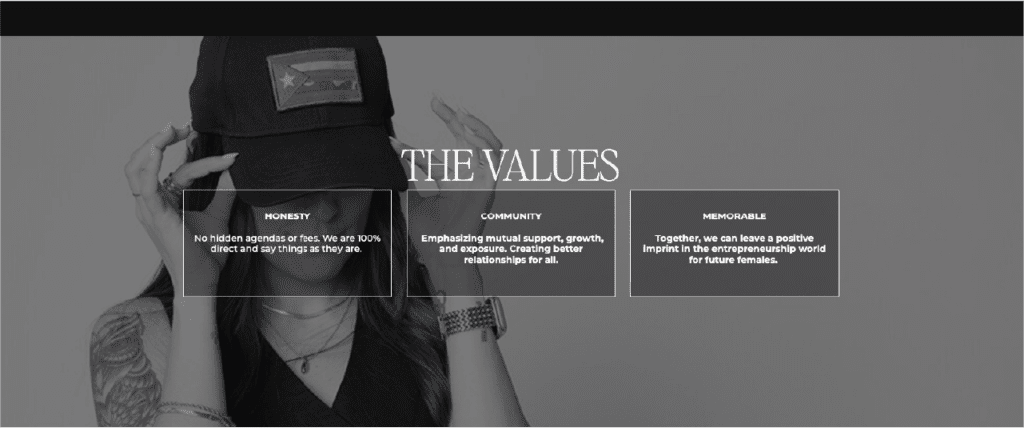
Include things like your story, your approach to photography, why you love capturing families or newborns and a few personal details that help people connect with you.
And don’t forget to include a photo of yourself. Photography is personal, and showing your face helps build trust before a client ever contacts you.
4. Contact Page: Make Booking Simple
Once someone decides they like you and your work, the next step should be easy. Your contact page should remove any friction from the booking process.
Include:
- the location or areas you serve
- a friendly message inviting inquiries
- a contact form requesting their name, email, session interested in and a message box
- your expected response time and a friendly thank you message
For example:
“Thank you for considering me as your family photographer. I typically respond to all inquiries within 24 hours.”
A simple and welcoming contact page can make a big difference in whether someone actually submits an inquiry.
5. Investment or Packages Page
Instead of creating multiple pricing pages for each service, photographers can benefit from having one all-inclusive Investment or Packages page that outlines the details of all the sessions they offer. This page becomes a single point of reference when potential clients ask one of the most common questions: “What are your packages?”
By directing people to one clear page, you make it easier for clients to understand your offerings while keeping your website organized. It is also a great place to host your frequently asked questions like refunds, rescheduling and cancelation policies.
Your investment page can include an overview of your main photography services, such as:
- Newborn Photography
- Family Photography
- Maternity Photography
For each service, you can briefly outline:
- what the experience includes
- package options or collections
- the starting investment
- links to the corresponding portfolio page
This structure allows visitors to quickly compare sessions and understand how your services work without needing to search through multiple pages.
Having a dedicated investment or packages page also helps streamline communication. Instead of repeatedly explaining your pricing in emails or DMs, you can simply share one link that clearly answers the question.
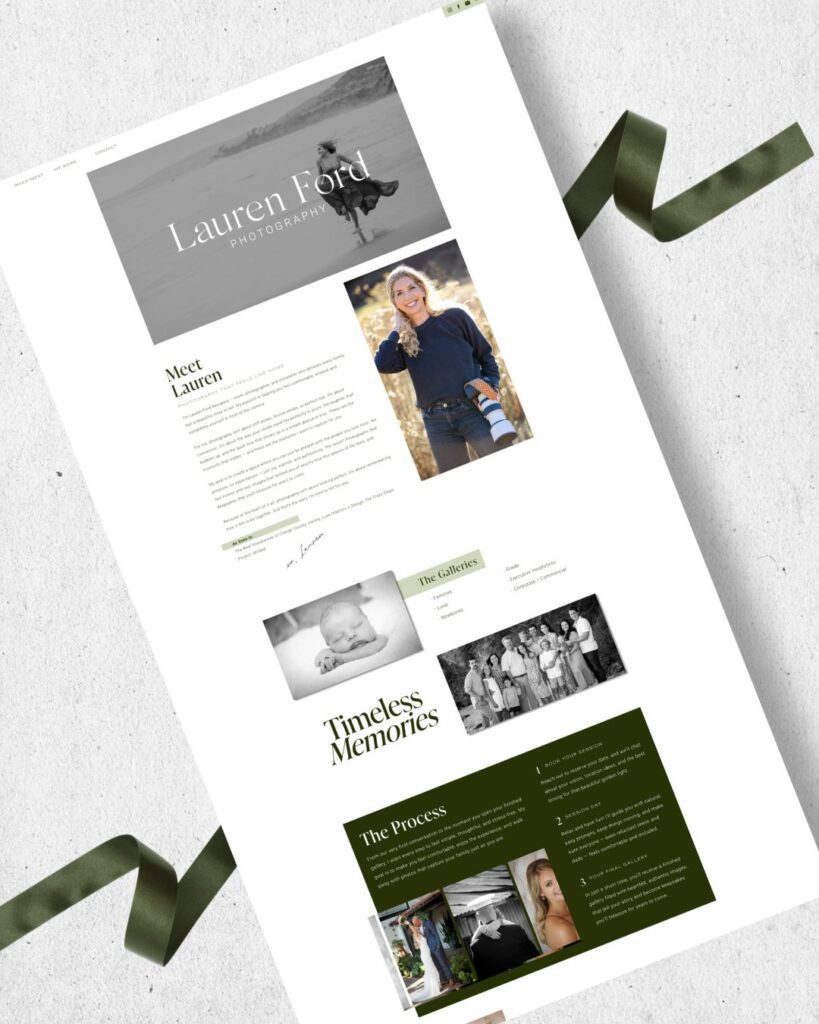
An all-inclusive Investment or Packages page creates a smoother experience for both you and your clients while helping potential clients move one step closer to booking.
Additional Pages That Can Strengthen a Photographer’s Website
Beyond the essential pages, there are other website pages every photographer should have to improve your photography website structure, client experience, and search visibility.
6. Blog: One of the Best SEO Tools for Photographers
If you want your website to show up in Google searches, a blog can make a huge difference. Every blog post creates another opportunity for people searching online to discover your photography business.
When potential clients search questions like:
- “what to wear for beach family photos in California”
- “how to prepare for a newborn photo session in my house”
they could land directly on your website. Over time, this builds organic traffic to your photography website. Add testimonials that talk about the specific topics like “Brianna was amazing at my newborn photo session. She came to my house ready to work around my two month old feeding and nap schedule”.
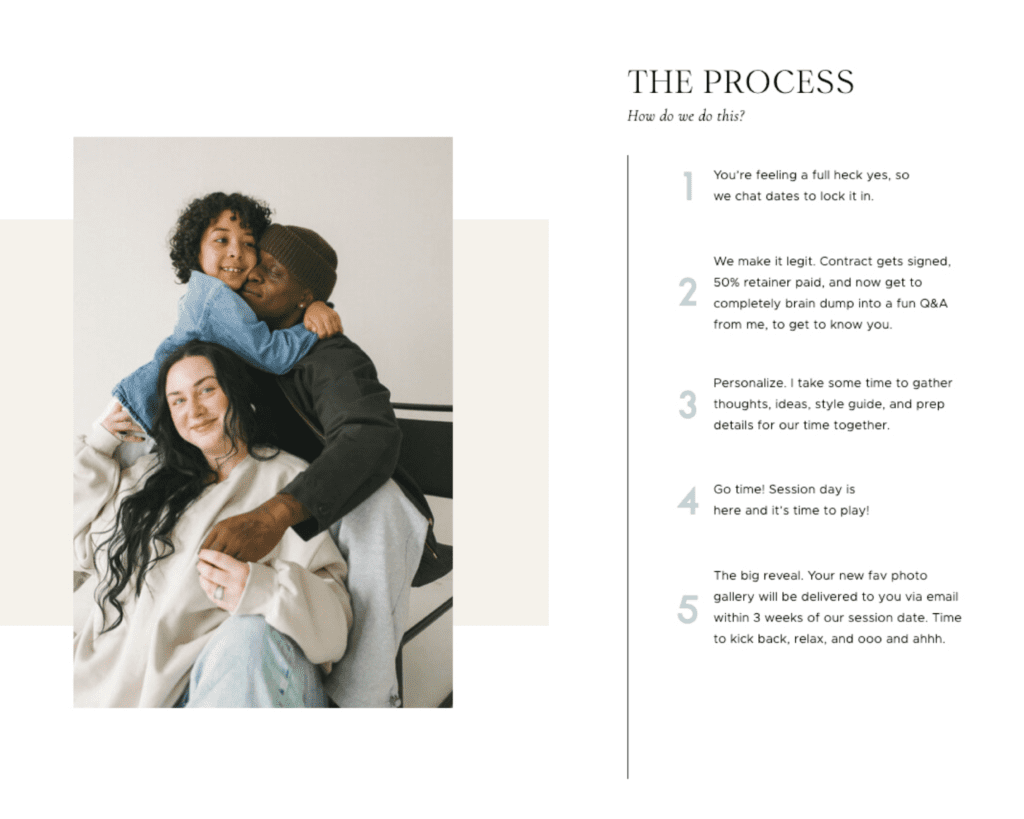
Here are 7 blog post ideas that can bring you photography clients from Google:
- What to wear for family photos at the beach in California
- How to prepare for a newborn photo session at my house
- Best time of day for outdoor family photos in Northern Florida
- What to Bring to my newborn photography session in a studio
- How to choose the right photographer for your family
- Studio vs outdoor family photos in Texas
- When to schedule your maternity photos and what to wear
These types of posts answer questions clients are already searching online, making them powerful tools for photography website SEO.
7. Welcome or Style Guide Pages (for Each Service)
This is one of those “Website Pages Every Photographer Should Have” that can take your clients experience from average to supreme. It is also my most requested page as a website designer by photographers.
Instead of a generic FAQ page or sending your clients a PDF attachment, consider creating welcome or style guide pages tailored to each service you offer. These pages are designed to improve the client experience, not just attract new visitors.
Examples of these pages can be a newborn session welcome guide, a family session style guide or a maternity session preparation guide.
These pages can walk clients through things like:
- what to wear
- how to prepare for their session
- what to expect during the experience
- tips for getting the best photos
By creating guides that are specific to each type of photography session, you provide helpful information while also elevating the overall experience for your clients.
Final Thoughts
A well-designed photography website isn’t just about beautiful images. It’s about creating a clear structure that helps clients find you, trust you, and book you.
By building the right pages on your website, photographers can:
• improve their photography website SEO
• attract potential clients through Google
• guide visitors toward booking
• create a better overall client experience
If reading this made you realize your website is missing key pages, feels outdated, or isn’t guiding visitors toward booking, it may be time for a refresh.
I work primarily with photographers to create websites that feel polished, strategic, and built to convert. In fact, 94% of my client work is with photographers and their websites, so this isn’t just something I understand in theory — it’s the work I do every day.
If you’re ready for a website that attracts the right clients and supports your bookings, explore my website services here.

Follow me along on Instagram
Explore my work on the website
Read more of my journal entries on the STUDIO NOTES