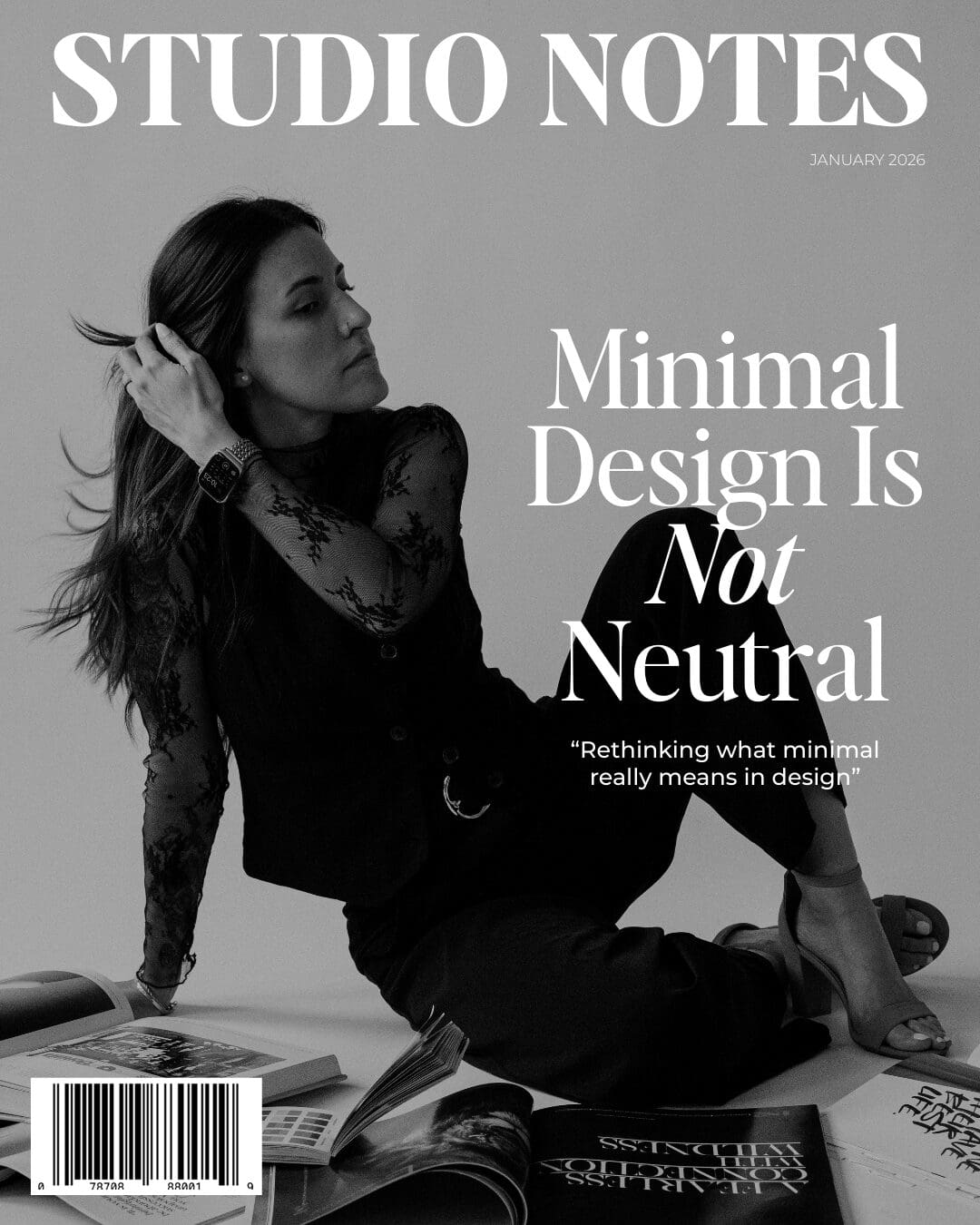
Rethinking what minimal really means in design.
Minimal design is often misunderstood as safe. As if removing elements somehow removes opinion.
In reality, however, minimal design is one of the most decisive choices a brand can make.
When there’s less on the page, everything carries more weight. As a result, typography becomes louder. Spacing becomes intentional. Hierarchy becomes impossible to ignore. Without excess or ornamentation, nothing hides behind decoration. Every decision stands in plain sight.
And that exposure is precisely what makes minimal design powerful and why it is never neutral.
Editorial brands understand this instinctively. Rather than decorating layouts, they compose them. Every margin, headline, and pause exists because it earned its place. There is a quiet confidence in this restraint, in knowing what to leave out—not just what to include.
By contrast, most brands struggle with minimalism not because they lack taste, but because they resist editing. They add to avoid choosing. They fill space to soften decisions. In doing so, they mistake clarity for emptiness and simplicity for incompleteness.
But minimal design isn’t about removing personality. Instead, it’s about refining it.
When restraint is applied thoughtfully, what remains feels deliberate. The eye knows where to begin. The content knows how to breathe. As a result, the brand feels authored, not assembled.
This is why minimal design often feels elevated. Not because it’s quiet, but because it’s controlled. Silence becomes part of the language. White space becomes structural. Hierarchy, rather than trends or excess imagery, does the work.
Minimalism, then, asks harder questions of a brand:
- What matters most?
- What deserves attention?
- What can stand on its own?
The answers to those questions are never neutral.
A minimal layout reveals how a brand thinks. It shows whether decisions are intentional or reactive. Whether the brand trusts its voice—or hides behind volume.
True minimal design isn’t about playing it safe. I think it’s about standing firmly behind what remains.
And that confidence is always felt.
Follow along on Instagram
Explore my work on the Website
Read more of my journal entries on the STUDIO NOTES